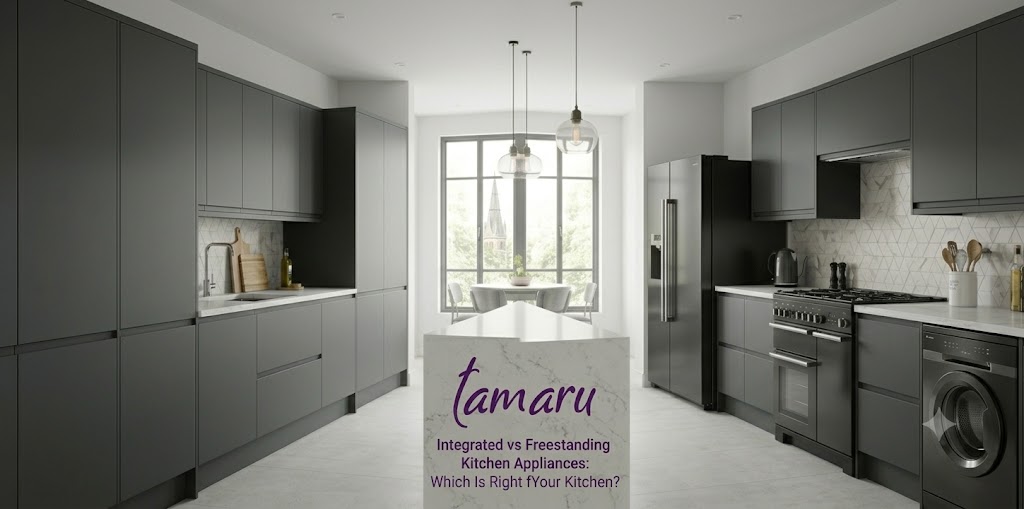
When planning a new kitchen, appliances can sometimes feel like something to choose once the cabinetry and layout have been decided. In reality, it is worth thinking about them much earlier.
When planning a new kitchen, appliances can sometimes feel like something to choose once the cabinetry and layout have been decided. In reality, it is worth thinking about them much earlier.
The size and position of your fridge, ovens, dishwasher and hob can influence everything from cabinetry and storage to electrics, ventilation and worktop space. There is also the question of whether those appliances should be integrated into the kitchen or become part of the design in their own right.
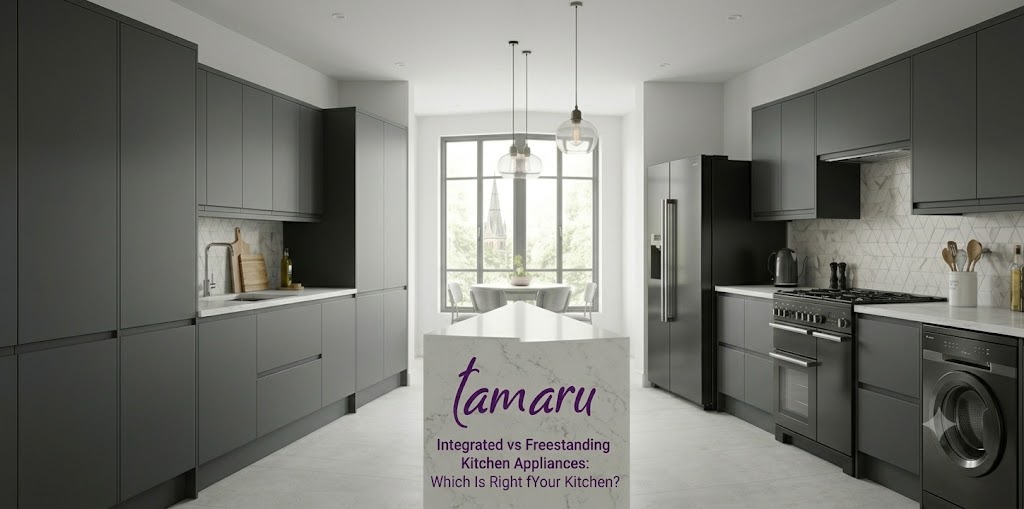
One of the questions we are often asked is whether integrated appliances are better than freestanding ones. As with many aspects of kitchen design, there isn't one answer that suits every home. Both have advantages, and often a combination of the two can work particularly well.
Integrated vs freestanding appliances at a glance
It is useful to distinguish between integrated and built-in appliances too. An integrated dishwasher or fridge is typically concealed behind a furniture door, while a built-in oven is fitted within the cabinetry but remains visible.
What do we mean by integrated appliances?
Integrated appliances are designed to sit within the kitchen cabinetry. With a dishwasher or fridge, a furniture door can be fitted to the front so that the appliance blends into the surrounding kitchen. Ovens, microwaves and coffee machines can also be built into cabinetry, although they remain visible.
This can create a calm, consistent run of cabinetry and is particularly appealing where the kitchen connects to an adjoining dining or living space.
In contemporary German kitchens, integrated appliances work particularly well with the clean lines of a handleless design. They can be equally successful within handmade cabinetry, allowing the furniture and detailing to remain the focus.
If an integrated appliance needs replacing in the future, the new model will need to be suitable for the existing space and installation, so this is worth considering when the kitchen is first designed.
Where freestanding appliances work well
Freestanding does not necessarily mean compromising the design. Sometimes an appliance can become a feature in its own right.
A range cooker, for example, can add character to a kitchen. The same can be true of statement refrigeration, particularly where generous food storage is important or the proportions of a larger appliance suit the room.
At Tamaru, we work with appliance brands including LaCanche and Sub-Zero & Wolf, where the appliance itself can become a deliberate part of the kitchen design.
Freestanding appliances can also offer greater flexibility in terms of size and replacement. This can be useful for a busy family that prioritises refrigeration capacity, or simply where a particular appliance suits the way you cook and use your kitchen.
Do you have to choose one or the other?
Not at all. Combining integrated and freestanding appliances is something we often consider.
You might integrate the dishwasher, choose built-in ovens at a comfortable height and then make a range cooker or larger refrigerator a more visible feature.
Appliance placement matters too. Positioning the dishwasher close to where you keep plates, glasses and cutlery can make clearing away easier. Locating refrigeration near the edge of the working kitchen can also allow family members to reach it without walking through the main cooking area.
Small decisions like these can make a noticeable difference to how the kitchen works every day.
Integrated fridge or statement refrigeration?
Refrigeration is one area where the choice between integrated and freestanding deserves particular thought.
An integrated fridge can almost disappear into the kitchen, maintaining an uninterrupted run of cabinetry. For many clients, particularly in an open-plan space, that simplicity is very appealing.
For others, capacity is more important. Larger refrigeration systems can provide more room for fresh food, entertaining and family life, while also becoming a feature within the kitchen.
At Tamaru, we can explore different approaches, from integrated refrigeration to larger systems from brands such as Liebherr Monolith and Sub-Zero.
Think realistically about how much fridge and freezer space you use. A family that cooks in batches, entertains regularly or shops once a week may have very different requirements from a smaller household.
For clients considering luxury kitchen appliances in Milton Keynes and the surrounding areas, refrigeration is a good example of why seeing different options in person can be useful. Capacity, internal layout and overall proportions can be just as important as appearance.
Range cooker or built-in ovens?
Built-in ovens can be positioned at a comfortable height and incorporated neatly into tall cabinetry. Multiple ovens, warming drawers, microwaves and coffee machines can also be grouped together.
A range cooker creates a different feel. It combines cooking functions within one substantial appliance and can become a focal point in both traditional and contemporary kitchens.
Neither approach is inherently better. We look at how our clients cook, the style of kitchen they prefer and the space available before exploring the options.
Induction vs gas: which hob should you choose?
Gas provides a visible flame and direct control, which some keen cooks enjoy using. Induction offers a different experience, with a smooth cooking surface, quick response and easy cleaning.
Induction works by heating compatible cookware directly. There is no open flame, and many models offer features such as pan detection, safety switch-off and residual heat indicators. The glass can still retain heat from cookware after cooking, so normal care is still needed.
There are practical considerations too. Induction requires compatible magnetic cookware, and its electrical requirements need to be considered during the kitchen design. With gas, the gas supply and ventilation need to form part of the planning.
While hob efficiency is worth considering, we would also look at how you like to cook, the position of the hob and how it works within the overall kitchen design.
BORA venting hobs are another option where appropriate, combining the hob and extraction within one appliance and potentially removing the need for a conventional overhead extractor.
Why we recommend choosing appliances early
The size and specification of your appliances can affect the cabinetry, services and layout around them, which is why we prefer to discuss them early.
A hob needs to be considered alongside the worktop, extraction and electrical or gas supply. Refrigeration can have its own requirements too. If you choose a fridge with a plumbed water dispenser or a freezer with an automatic ice maker, a suitable water supply may need to be planned into the kitchen.
The same applies to a Quooker boiling-water tap, where space is needed within the sink cabinet for the tank and associated components.
Choosing these elements early means the cabinetry, plumbing, electrics and ventilation can be considered as part of the overall design rather than trying to accommodate additional requirements later.
At Tamaru, we work with appliance manufacturers including Miele, Siemens, Sub-Zero & Wolf, Liebherr, BORA and LaCanche, allowing us to consider the appliances alongside the cabinetry, storage and layout.
Frequently asked questions
Are integrated appliances better than freestanding appliances?
Neither is automatically better. Integrated appliances can create a seamless appearance, while freestanding appliances can offer greater flexibility and, depending on the appliance, more capacity. They can also become a feature in their own right. Many kitchens benefit from combining the two.
Are integrated appliances difficult to replace?
They can require more consideration because a replacement needs to work with the existing cabinetry and installation. This is one reason it is useful to consider appliance sizes and specifications carefully when the kitchen is first designed.
Is induction better than gas?
It depends on how you like to cook. Induction is responsive, efficient and easy to clean, while gas provides visible flame control and is still preferred by some cooks. We would consider your cooking habits, kitchen design and the practical requirements of each.
Can I have a range cooker in a modern kitchen?
Absolutely. Depending on its design and the surrounding cabinetry, a range cooker can become an interesting feature in a contemporary kitchen as well as a traditional one.
Finding the right balance for your kitchen
Appliances are a personal part of kitchen design. For one household, a large refrigerator may be essential. For another, hiding refrigeration behind cabinetry may be more important. One client may love cooking on gas, while another prefers induction.
Our role is to help you understand those choices and how they affect the wider kitchen.
If you are planning a new kitchen, we can look at cabinetry, appliances, storage and layout together, helping you decide where integration makes sense and where a visible appliance could become part of the overall design.
At our kitchen showroom in Leighton Buzzard, you can explore different kitchen styles and appliance options and talk through what might work best for your own space, lifestyle and budget.